Showing posts with label non-fiction. Show all posts

Monday, August 13, 2012

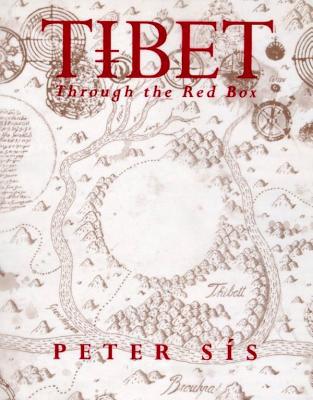
Tibet: Through the Red Box


Tibet: Through the Red Box. Peter Sis. (1998). 64p. New York: Farrar, Straus and Giroux.

Awards and Honors: Caldecott Honor

Review:
Sis weaves a complicated, rich and multi-layered story in Tibet: Through the Red Box. When Peter Sis was a child, his filmmaker father was sent to Tibet via China to document the building of the first modern road into the country. The project was to take two months but tragedy separates the elder Sis from the road crew and the trip stretches into years. During this time Sis's father kept a journal of the magical and mysterious things that he experienced. After he returned home to Czechoslovakia, he would often tell Peter about his amazing experiences, but Peter was never allowed to touch the journal which was kept in a red box on a shelf in his father's study. Many years later when Sis is grown and living in America, he receives a brief note from his father telling him that the box is now his... Tibet: Through the Red Box tells the story of Sis's father's time in Tibet through his father's diary entries, interspersed with Sis's own retellings of the stories his father told him as a young child, intricately detailed mandalas, maps, recreations of diary pages, and beguiling full-spread illustrations. The effect is an absolutely haunting blend of fantasy and reality which will captivate readers.
Opinion:
I'm a fan of Sis's children's books so I thought I knew what to expect from Tibet: Through the Red Box, but I was seriously blown away by this book. I haven't stopped recommending it to people since I've read it. Unfortunately, this is one of those books that tweens won't necessarily come across while they're browsing the shelves, and even if they do the picture book format suggests that it is a book for a much younger child.

Ideas:
I've been toying with the idea of creating a "picture books for older readers" shelf in my library. This is definitely a book that I would add to that collection.

The Tree of Life: Charles Darwin


The Tree of Life: Charles Darwin. Peter Sis. (2003). 44p. New York: Farrar,  Straus & Giroux.

Awards and Honors: 
American Library Association Best Books for Young Adults, American Library Association Notable Children's Books, New York Times Book Review Best Illustrated Books of the Year, New York Times Book Review Notable Children's Books of the Year, Amazon.com Top 10 Editors’ Picks: Children, Bank Street Best Children's Book of the Year, Parents' Choice Award Winner, John Burroughs List of Nature Books for Young, National Science Teacher's Association-CBC, Outstanding Science Trade Books for Children, Horn Book Magazine Fanfare List, Kirkus Reviews Editor's Choice, Publishers Weekly Best Children's Books of the Year, School Library Journal Best Books of the Year

Review:
A wondrous and detailed look into the life and work of famed naturalist and father of the theory of natural selection, Charles Darwin. In inimitable Sis style, this book takes on an almost scrapbook-like quality, featuring highly detailed illustrations, panels within panels, diary pages, maps, and a double gate-fold panel, while it illuminates Darwin's personal and professional life. Sis does an excellent job of balancing his own dreamlike aesthetic with the facts and figures of Darwin's life, while managing to steer clear of inflaming the religious controversies surrounding Darwin's work.

Opinion:
This is a spectacular picture book for older readers, packed with incredible detail and fact.

Ideas:
Picture books for older readers really deserve more attention. I'd feature this book in a library display spotlighting great illustrated books for older readers.

Tuesday, June 26, 2012

An American Plague


An American Plague: The True and Terrifying Story of the Yellow Fever Epidemic of 1793. by Jim Murphy. 2003. 165p. New York: Clarion Books. 

Genre: non-fiction

Honors and Awards: Newbery Honor, 2004; Robert F. Sibert Informational Book Award, 2004; National Book Award Finalist Medal;  Orbis Pictus Award; An ALA Notable Children’s Book; A YALSA Best Book for Young Adults; A SLJ Best Book of the Year; Blue Ribbon, Bulletin of the Center for Children’s Books; An Editor’s Choice, Kirkus Reviews
Review
Murphy weaves a taut and suspenseful tale of Philadelphia's yellow fever epidemic of 1793, tying in historical, political, religious, social and medical perspectives on how the city dealt with the terrible disease (which was not particularly well, in most cases). Philadelphia, then capital of the nascent country and seat of its government, was devastated by the disease; over 4,000 residents perished and 20,000 fled the city during the months that fever raged within the city. Murphy does a wonderful job of building the setting and pacing the action. The last chapters discuss the medical discoveries concerning yellow fever that were made in the 19th and 20th centuries, and the book ends with a grim warning of the potential for a modern day yellow fever epidemic because there is yet no cure for the disease.
Opinion
An excellent addition to curriculum and lessons on the epidemic of 1793, An American Plague, is comprehensive, well-written and intriguing, yet the rather academic writing style may deter some younger or less confident readers.
Ideas
Pair this book with Laurie Halse Anderson's historical fiction novel Fever 1973 for an in depth unit of instruction. 

Saturday, July 30, 2011

Queen of the Falls


Queen of the Falls
written and illustrated by Chris Van Allsburg, 2011. New York: Houghton Mifflin Books for Children. (9780547315812).

Author/ Illustrator Website: http://www.chrisvanallsburg.com/home.html

Media: pencil

Awards and Honors: none

Annotation:  
As tall as a seventeen story building and unimaginably powerful, the Niagara Falls have long inspired awe in everyone who visits this natural wonder. This is the story of Annie Edson Taylor, the first person to go over Niagara Falls in a barrel.

Personal Reaction:
      Chris Van Allsburg, well-known for his fantastical works of surrealistic fiction, tackles the story of Annie Edson Taylor the first person to ever go over Niagara Falls in a barrel. In 1901 Taylor was a 62 year old widow and retired charm school teacher, running low on money, when she decided that a trip over the falls might be just the thing to buoy her flagging finances. (Even though this is a true story, I was a bit perplexed as to how, after reading a newspaper article abut visitors to the falls, Taylor came to this conclusion.) Impressively enough, we learn that Taylor herself designed and commissioned a special barrel to be built that would be strong enough to withstand a trip over the falls and safe enough to protect her during the fall. She also had the forethought to hire a PR man who would drum up interest in her story and later manage her public appearances. 
   
     Taylor's trip over the falls was successful, of course, but her dreams of fame and fortune were not to be realized. She traveled the county fair circuits, making appearance and telling her story but the public wanted to see a real-life daredevil, not a "little old lady". Her manager steals her barrel, she gets it back, but gets a new manager who does the same, and she eventually has a new barrel made. She and her barrel end up in a park near the falls where she sells postcards of herself to passing tourists. 

     Taylor's story is pretty incredible. For a widowed woman of her age to attempt such a feat in 1901 is in itself quite amazing. But I had mixed feeling about the story: on one hand, this is an interesting argument for not judging a book by its cover, but Taylor's reasoning behind her stunt was just bizarre to me. Obviously financial gain was Taylor's primary concern, but how in the world she imagined such a dangerous stunt would be the answer to her problems was just plain weird. Its a shame that modern television reality shows weren't around in Annie Edson Taylor's time. If they were, she might just have realized her dreams.

Thursday, July 14, 2011

Blockhead: The Life of Fibonacci


Blockhead: The Life of Fibonacci
by Joseph D'Agnese, illustrated by John O'Brien, 2010. New York: Henry Holt and Company. (9780805063059).

Media: pen and watercolor

Author Website: http://www.josephdagnese.com/Welcome.html

Illustrator Website: none

Awards and Honors: Best 2010 Science Books for Kids — Smithsonian Magazine, Best Children’s Books of the Year — Bank Street College, Noteworthy Books for Children and Teens — Capitol Choices, 2011 ALSC Notable Nominee, Best Books for 2010 — Children’s Book Compass

Annotation:
     Leonardo Fibonacci is considered one of the greatest Western
mathematicians, but it wasn't always this way. When he was a kid he
daydreamed about numbers so much that people called him "Blockhead", until he learned that there's nothing stupid about following your passion.

Personal Reaction:
      Leonardo loves numbers and he thinks about them day and night. He daydreams about numbers so much that people begin calling him "Blockhead". Leonardo tries to ignore them and follows the advice of a friend who tells him, "... learn all you can about numbers. That way you will always be happy". This is a story not only about the mathematician known as Leonardo Fibonacci, but also about following your passion regardless of what other people think

     Even though Fibonacci lived almost 900 years ago, Joseph D'Agnese's first-person narrative style makes the story accessible for children and relatable enough that it seems as if it could have happened yesterday. D'Agnese takes what little is known about Fibonacci's life and skillfully pieces it together with a bit of imagination to fortify the tale. It's a kid friendly story filled with dashes of humor- when Leonardo's portly friend encourages him to follow his dreams, he says matter-of-factly, "I think people are happiest when the know what pleases them. Me, I love cheese". In another scene, Leonardo visits the palace of the Holy Roman Emperor who challenges him to solve "a bunch of really hard math problems". When Leonardo quickly completes the problems the Emperor calls Leonardo "one smart cookie". O'Brien's cheerful illustrations are filled with nautilus shells, sunflowers and ferns- all references to Fibonacci's famous pattern.

     Even if you are unfamiliar with Fibonacci and his famous numbers, Blockhead is well-crafted enough to enjoy simply on its own merits. This books would make an excellent addition to an upper elementary school classroom or library.

Curriculum Connection: 5th grade, math.

Friday, July 8, 2011

Can We Save the Tiger?


Can We Save the Tiger?

written by Martin Jenkins and illustrated by Vicky White, 2011, Somerville, Massachusetts : Candlewick Press. (0763649090).

Media: pencil and oil paint

Author Website: none

Illustrator Website: none

Awards and Honors: none

Annotation: Discusses endangered species and the role humans can play in threatening as well as rehabilitating their populations.

Personal Reaction: Jenkins and White have created a very special book with Can We Save the Tiger?. Sensitive and balanced without being preachy, Can We Save the Tiger? introduces children to well-known endangered species such as the tiger, but also makes a point of teaching about other less cuddly endangered animals like the Indian vulture and the Partula snail. I like that Jenkins not only discusses endangered animals, but also teaches children about animals like the bison and the rhinocerous, that were once endangered but through the actions of humans have been brought back from the brink of extinction. He also avoids condemning humans, explaining that sometimes the actions of people trying to house themselves and produce the things they need have resulted in harming animals: 
 
"So if you were a poor farmer trying to make a living with a couple of cows and a few goats, you might not be too happy if you found out there was a hungry tiger living nearby. And if you knew that someone might pay you more for a tiger skin and some bones than you could earn in three whole months working the fields, then you might find it very tempting to set a trap or two, even if you knew it was against the law". 
Jenkins' prose is warm and conversational and Vicky White's beautiful, delicately detailed illustrations really make the book. Using pencil and occasionally oil paints, she imbues each animal with a lifelike realism. Her animals, whether feathered, furry, scaly or slimy, are richly textured and seem to almost leap from the page. All in all, Can We Save the Tiger? is a wonderful, sensitive introduction to endangered animals for elementary aged children. 

Curriculum Connection: 
Elementary School biology

Lesson Plan:

Subject Area:             
Biology

Suggested Grade Level:     
4-5

Lesson Title:             
Causes of Extinction (adapted from Scholastic’s website:  http://www2.scholastic.com/browse/lessonplan.jsp?id=391)

Time:                 
1-2 hours

Materials/Equipment Required: 
-Can We Save the Tiger? By Jenkins and White

Objectives: 
There are five major causes of extinction: habitat loss, an introduced species, pollution, population growth, and overconsumption. Through the activity, students will create a list of reasons why animals can become extinct and learn the acronym HIPPO as a way of remembering causes of extinction.

Suggested Procedure:          

1.    Teacher will read aloud Can We Save the Tiger? to the class.
2.    Teacher will create scenario cards for each of the below causes of extinction. Multiple examples of each cause will be needed. An example: A species of bird lived in wetlands until trash and chemicals made them sick (pollution), A species of fish lived in streams and rivers until a new, invasive species of fish came and started eating them (introduced species)
3.    Write this acronym on the board and discuss each cause:
     
H- Habitat loss
I - Introduced species
P- Pollution
P- Population growth
O- Overconsumption 
   4. Read the scenario cards and have students give the cause (habitat loss, introduced species, pollution, population growth, overconsumption) behind each scenario.
 

Wednesday, July 6, 2011

James Towne: Struggle for Survival

James Towne: Struggle for Survival
written and illustrated by Marcia Sewall, 2001, New York: Atheneum Books for Young Readers. (978-0-689-81814-1).

Author/ illustrator website: no author website

Media: watercolor and Sepia ink 
Awards and Honors: CBC/NCSS Notable Social Studies Trade Book, Parents' Choice Award
 
Annotation:
Sewall provides a narrative account of the establishment of Jamestown, Virginia, including John Smith’s role in the colony’s development and the difficult early years of life in the new world.

Personal Reaction:
     Sewall engages and educates readers with this detailed account of the difficulty of James Towne’s establishment and early years, experienced through diary-like entries of one of the colony’s settlers.  Dated accounts before and after entries keep the story on track and the pacing steady while the narrator’s personal reflections (that lean more towards truth than fiction), lend credit and personality to historic events.  Each entry is followed by a quote from an actual James Towne’s colonist—from many different colonists—providing context to the events described and putting a human face (and feeling) to the story.   
     Sewall’s illustrations almost seem as if the narrator himself could have created them, binding the story’s text to the visual representation in a way that opulent or overly detailed illustrations could not have:  the style is realistic in that the scenes pictured are non-fantastical and are representative of historic truth, not the narrator’s interpretation of them (which Sewall brilliantly manages to maintain throughout the entire story while still lending the narrator a separate and distinct personality).  Yet the ink and watercolor media combination present the illustrations as something the narrator or a fellow colonist could have created in their own observations of the development of James Towne: the media style is merged with the story, not depleting the text but deepening the reader’s personal connection to the narrator which the diary-like writing style began.
     The story starts with James Towne’s own beginnings as an idea formed in England: three ships depart the country, after which the journey to the Americas and its hardships are documented, and then the founding and building of the colony is explored.  Sewall looks at aspects of early colonial life that are generally overlooked by school books and for which this story could easily supplement the curriculum:  hardships beyond interacting with the natives and the new land, such as the people England continued to send over to live in the colony despite James Towne’s struggle to care for its current inhabitants, and the reliance these colonists continued to have on their home country despite having lived in the new world for several years.  Life after John Smith is also highlighted, and how the colony almost (literally) died out.  Sewall provides a list of the story’s characters at the book’s end and a glossary of terms.  The need for both of these demonstrates this book’s reliance on historical fact and how Sewall attempted to have readers experience James Towne as the settlers did—with the words of those around them and the language of the times.  Further source material is offered which would enrich continued lessons or focus on the subject for any classroom.      

Use of Repetition:
The book is presented in a diary-like fashion, with descriptions of the arrival and founding of James Towne and offering a specific date listed before or after an entry by the narrating carpenter.  This continual record keeps the story on track and a steady pace through the colony’s development.  The quotes featured on each page from actual James Towne residents (including Captain John Smith), put faces and feelings to this historic account and constantly remind readers of the reality of this time.

Curricular Connection: California History / Social Science, Grade 5, California Standard: 5.4: Students learn about the major individuals and groups responsible for the founding of the James Towne colony (such as John, Smith), understand the influence of location and physical setting of the colony, and be able to identify the location of the colony and the American Indian tribes inhabiting the area.

Independent Dames: What You Never Knew About the Women and Girls of the American Revolution


Independent Dames: What You Never Knew About the Women and Girls of the American Revolution
by Laurie Halse Anderson, illustrated by Matt Faulkner
2008, New York: Simon and Schuster Books for Young Readers. (0689858086).


Media: watercolor and pen and ink

Awards and Honors: CBC/NCSS Notable Social Studies Trade Book, Storytelling World Award

Illustrator Website: http://www.mattfaulkner.com/

 
Annotation: Everybody knows about the heroes of the American Revolution George Washington, Thomas Jefferson and John Adams, but how much do you know about the women and girls who fought for America's freedom?

Personal Reaction: Author Laurie Halse Anderson and illustrator Matt Faulkner have created a lively and engaging book with Independent Dames. Anderson draws readers in with a light conversational tone, yet packs a whole lot into 40 pages. The main narrative explains all the different ways in which women contributed to the war effort; from raising funds for the troops, to acting as spies for the American forces, and even disguising themselves as men in order to fight on the battlefields. Insets on each page tell the stories of real-life heroines of the American Revolution, while a timeline along the bottom of the pages provide a chronology of the war. All these components comprise merely the text of the book- there is a parallel narrative occuring in the illustrations. A school play about the heroes of the Revolution is crashed by Revolutionary women on horseback, who procede to tell their stories. The illustrations are executed in pen and ink with watercolor. Faulkner's heroines are expressive without being cartoonish and speech bubbles will draw in young readers who are partial to comics and graphic novels. Even with all of these things occuring simultaneously on each page, the book never feels overwhelming or confusing. Anderson provides back matter for children interested in learning more, and sorts fact from fiction about Revolutionary women who students may have already heard of such as Betsy Ross and Molly Pitcher. 

Curricular Connection: 
5th Grade History/ Social Studies, California State Board of Education Standards
5.6     Students understand the course and consequences of the American Revolution.
     3. Identify the different roles women played during the Revolution (e.g.,   
        Abigail Adams, Martha Washington, Molly Pitcher, Phillis Wheatley, Mercy Otis Warren).

Sunday, June 26, 2011

For Liberty: The Story of the Boston Massacre


For Liberty: The Story of the Boston Massacre
written and illustrated by Timothy Decker, 2009, Asheville, North Carolina: Front Street Press. (9781590786086).


Media: pen and ink

Awards and Honors:
2009 Cybil Nominated title for Non Fiction (MG/YA)

Author/Illustrator Website: http://timothydecker.com/
Annotation: A stark, graphic novel style account of the Boston Massacre, one most significant events in the lead up to the Revolutionary War.

Personal Reaction:
Author and illustrator Timothy Decker builds this story of the Boston Massacre slowly in deliberate, measured prose, while his austere pen and ink drawings capture the drama and tension of the storyline. There's much lying beneath the surface in this deceptively simple book. Decker is economical with his words and images, yet he still manages to pack a wealth of historical detail into the story. Background on the political situation in the colonies and Great Britain is given at the beginning of the story and Decker concludes with the subsquent trial of the soldiers. This book presents a balanced account of a very dramatic chapter in United States history. Black and white illustrations complement the gravity of the historical event. For Liberty is different than many historical picture books in that there is no back matter such as a timeline or bibliography, but this book would make an excellent addition to any lesson on the Boston Massacre.
Use of Onomatopoeia: 
"Bells pealed throughout the city."
"They could hear the growing din as the talked." 
"The throng of colonists grew as did the roar of their cries." 
"The bells continued to ring as if signaling the new tragedy."


Use of Sophisticated Language:
"Quarter no fiendish soldiers in your homes. Welcome no ill bred thieves to your hearth. Protect your liberties in this doleful and dark time."
"...soldiers quartered in a populous town, will always occasion two mobs where they prevent one. They are wretched conservators of the peace."
Use of Rhythm/Repetition:
"The mob swelled.
The reasonable men went home.
The bellicose remained."

"Surely the mob would not assault a trained soldier.
Surely his men would not fire for fear of shooting their officer.
Certainly a show of force would dissolve the anger."

Curricular Connection: 
5th Grade History/ Social Studies, California State Board of Education Standards
5.5     Students explain the causes of the American Revolution.
1. Understand how political, religious, and economic ideas and interests brought about the Revolution (e.g., resistance to imperial policy, the Stamp Act, the Townshend Acts, taxes on tea, Coercive Acts).