Showing posts with label lesson plan. Show all posts

Saturday, August 6, 2011

The Extraordinary Mark Twain (According to Susy)


The Extraordinary Mark Twain (According to Susy)
by Barbara Kerley, illustrated by Edwin Fotheringham. 2010. New York: Scholastic Press. (9780545125086).

Author Website: http://www.barbarakerley.com/Site/Welcome.html

Illustrator Website: http://www.edfotheringham.com/

Media: digital media

Awards and Honors: A Junior Library Guild Selection; Kirkus, starred review; School Library Journal, starred review; Publishers Weekly, starred review

Annotation:
Much ink has been spilled writing about Samuel Langhorne Clemens, the man the world knows as Mark Twain, but did you know that his closest biographer was Susy Clemens, his young daughter?

Personal Reaction:
      The Extraordinary Mark Twain (According to Susy) is an illuminating look at Mark Twain, the husband and father. Written from anecdotes compiled by Susy Clemens, Twain's young daughter, it offers entertaining, personal observations on the man that many thought they understood, but few really knew. Susy, determined to "set the record straight" on her "Papa", wrote a revealing biography of him in her own diary and Kerley uses actual excerpts in the book. These are included as neat journal inserts in flowy handwriting font. Fotheringham's digital illustrations are sometimes flat looking, as digital drawing are often wont to be, but his caricatures of Twain are expressive and spot-on. An author's note at the ends offers more details of Mark Twain, Susy and their close relationship, a timeline of Twain's life and tips on writing an extraordinary biography. 

Curriculum Connection: 
Upper Elementary/Middle School Language Arts and Social Studies

Lesson Plan:

Teacher:               
Diana Garcia

Subject Area:              
Language Arts/Social Studies      

Suggested Grade Level:      
5-7  

Lesson Title:              
Writing Biographies

Overview:              
Students will learn about biographies- what one is, how to create one- and will pair off with a classmate and create a short biography of them.

Time:                  
2-3 hours
Materials/Equipment Required:  
- The Extraordinary Mark Twain (According to Susy) by Barbara Kerley
- notebooks
- pencils

Objectives:  
Students will learn about the process of writing a biography and will practice by pairing together with a classmate, interviewing and writing a biography about them. Students will learn to research, conduct inquiries, organize and summarize information into well-written mini-biographies.
Suggested Procedure:          
Teacher will read aloud The Extraordinary Mark Twain (According to Susy) and lead a discussion of Susy and her biography of “Papa”.
Teacher will distribute the handout  “Writing an Extraordinary Biography” (available at www.barbarakerley.com/ teachers.html) to students and they will read it together and discuss how to:
1.    gather information by conducting interviews and taking notes
2.    how to get facts straight about people, places, dates, events, quotes
3.    bring the subject to life by including details, quotations, lots of examples
4.    create a well-rounded portrait of their subject by showing difficulties and successes, good and bad habits, serious and funny sides
Teacher will ask students to pair off and interview each other. Example questions are: 
-    Where were you born?
-    Who are the members of your family
-    Where do you live?
-    Who is your best friend?
-    What do you want to be when you grow up?
-    What is your best quality?
-    What is your worst habit?
-    Tell me a funny story about your family/friends?

Students will takes turns being the interviewer/subject, taking notes, etc.

Students will produce a short 1 to 2 page biography of each other.

Additional Resources:  
Allow students to explore biographies of famous people in the library, or on  biography.com or the Biography Resource Center database (if available)

Friday, August 5, 2011

Energy Island: How One Community Harnessed the Wind and Changed Their World


Energy Island: How One Community Harnessed the Wind and Changed Their World
written and illustrated by Allan Drummond, 2011. New York: Farrar, Straus and Giroux. (9780374321840).

Media: pen and ink with watercolor

Author/Illustrator Website: http://www.allandrummond.com/

Awards and Honors: Booklist, Starred Review; Kirkus Reviews; Los Angeles Times; New York Times Book Review; Publishers Weekly; School Library Journal, Starred Review

Annotation:
This is the story of the people of Samso, an island in Denmark, who by thinking creatively and working together were able to become almost completely energy independent.

Personal Reaction:
     Energy Island: How One Community Harnessed the Wind and Changed Their World tells the story of Samso, an island in Denmark, that has changed the ways in which they use and create energy. Allan Drummond makes an important topic eminently accessibly through his engaging prose and cheerful, cartoon-like illustrations. Green sidebars present factual information about topics such as global warming, fossil fuels, and renewable energy sources. It's an optimistic and encouraging take on a topic that can be very heavy (for children as well as adults). Drummond shows readers how a really daunting issue can be solved through some new ideas, the perseverance of a devoted few, and the hard work of the entire community.

Curriculum Connection: Elementary or middle school science- green energy 

Lesson Plan:
Subject Area:               
Environmental Science

Suggested Grade Level:       
3-6

Lesson Title:               
Learning about Energy

Overview:               
Students will learn about alternative energy sources.

Time:                   
2-3 hours
Materials/Equipment Required:   
- Energy Island: How One Community Harnessed the Wind and Changed Their World by Allan Drumond
- computer with internet access and projector
Each student will need:
- scissors
- 4 small paper cups (like drinking cups)
-  A marking pen (any color)
-  2 strips of stiff, corrugated cardboard -- the same length
- Ruler
- Stapler
- Push pin
- Sharpened pencil with eraser on the end
- Modeling clay
- A watch that shows second


Objectives:   
Students will learn about energy sources, explore ways to save energy, think of ways to reduce their impact on the environment and build an anemometer.

Suggested Procedure:           
Teacher will read aloud Energy Island and lead a discussion about the ways in which their community generates and uses energy. Teacher will write the ways on the board.
 

Class will brainstorm ways to help save the environment (i.e. switch to clean energy, use less energy and energy efficient appliances, watch water usage, recycle materials, reuse materials, buy things with less packaging, plant a tree)
 

Teacher will explore with students the EPA’s website (http://www.epa.gov/ climatechange/kids/solutions/technologies/index.html), focusing on the ways that renewable energy can be created.  

Class will learn about the US Department of Energy’s Wind for Schools project that installs wind turbines at rural schools (http://www.windpoweringamerica.gov/schools.asp).

Students will create their own anemometers, following the instructions at http://www.energyquest.ca.gov/projects/anemometer.html. Students can measure the relative wind speed at various locations around their school.

Additional Resources can be found at:
http://www.windpoweringamerica.gov/schools_teaching_materials.asp


Saturday, July 30, 2011

Bones: Skeletons and How They Work


Bones: Skeletons and How They Work
written and illustrated by Steve Jenkins, 2010, New York : Scholastic Press. (0545046513).

Author/Illustrator Website: http://www.stevejenkinsbooks.com/

Media: paper collage

Awards and Honors: A Junior Library Guild Selection for Fall 2010, A Society of Illustrators Original Art Show choice

Annotation: A creative look at bones and skeletons of all shapes and sizes, what they do, and how they do it. 

Personal Reaction: 
     This is a wonderful picture book for children who are fascinated by bones or for educators to enrich lessons on the skeleton (human and otherwise). Steve Jenkins employs his trademark paper collage illustrations to explain how bones protect, support, and enable movement for all vertebrates. Cream collage skeletons on boldly colored solid pages are attention grabbers and Jenkins uses fold out double spreads to great effect in illustrating some spectacular full skeletons. One really neat feature of the illustations is that they are done to scale so that the reader can compare the sizes of various bones and animals. Jenkins includes additional facts, stories, history and science relating to bones at the end of the book. This is a book that elementary age kids (especially boys) will want to read again and again.

Curriculum Connection: Elementary school biology

Lesson Plan:

Subject Area:             
Biology

Suggested Grade Level:     
4-5

Lesson Title:             
Bones

Time:                 
1-2 hours

Materials/Equipment Required: 
- Bones: Skeletons and How They Work written and illustrated by Steve Jenkins
- modeling clay
- paper
- tape
- paper or plastic plates
- weights (wooden blocks)

Objectives: 
Students will learn about bones (the different types, how they protect the body, support it and allow it to move) and joints in the human body.

Suggested Procedure:         
Teacher will read aloud Bones: Skeletons and How They Work.

 Bone and Joint Activity:

1) Teacher will show students a picture of a bone pointing out the
         various parts of the bone, and reviewing important vocabulary. 
2) Students will create a clay model of the bone, labeling the parts
         of it.
3) Teacher will introduce the four joints of the human body. 
4) The teacher will demonstrate the movements of the joints. 
5) Students will brainstorm examples in the human skeletal system for each type of joint.

Bone Strength Activity:

1) Students will roll up half a sheet of letter-sized paper into a cylinder about 1 inch wide. They will make 3 of these.2) Students will stand the bones up on their ends and place a paper plate on top of the bones.
3) Students will begin to add weights (wooden blocks) to the plate.
4) Students will count how many blocks the plate can hold before the “bones" collapse.
5) Students will roll 3 more sheets of paper as tightly as they can so that there is no hollow section 
6) Students will stand these "bones" up as before placing the same plate on top of them.
7) Students will place weights on top of the plate until they collapse.
8) Students will deduce what happened. Teacher will explain that hollow
bones were able to support more weight. Teacher will continue explaining that the large bones in our body are also hollow, which makes them strong so they can support more weight, but light, so it takes less energy to move them.


Sunday, July 24, 2011

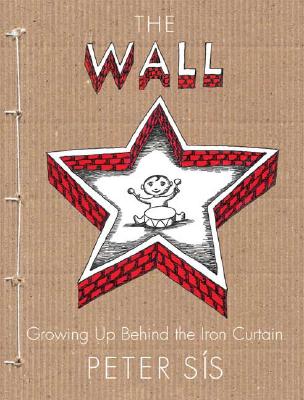
The Wall: Growing Up Behind the Iron Curtain


The Wall: Growing Up Behind the Iron Curtain
written and illustrated by Peter Sis, 2007, New York: Farrar, Straus and Giroux Books for Young Readers. (0374347018).

Author/Illustrator Website: http://www.petersis.com/

Media: pen and ink, with water color, colored pencils and multimedia elements

Awards and Honors: American Library Association Best Books for Young Adults; American Library Association Notable Children's Books; Caldecott Honor Book; IRA Notable Books for a Global Society; Boston Globe - Horn Book Award; New York Times Book Review Best Illustrated Books of the Year; Orbis Pictus; Amazon.com Top 10 Editors’ Picks: Children; Bank Street Best Children's Book of the Year; CCBC Choice (Univ. of WI); Children's Books: 100 Titles for Reading and Sharing, New York Public Library; Eisner Award Nominee; Parents' Choice Award Winner; NCSS-CBC Notable Trade Book in the Field of Social Studies; Booklinks Lasting Connection; Booklist Editors' Choice; Booklist Top 10 Biographies for Youth; Bulletin of the Center for Children’s Books Blue Ribbon Award; Horn Book Magazine Fanfare List; Kirkus Reviews Editor's Choice; Publishers Weekly Best Children's Books of the Year; School Library Journal Best Books of the Year; VOYA's Nonfiction Honor List; Robert F. Sibert Award - Medal; Capitol Choices Noteworthy Titles for Children and Teens; Illinois Read for a Lifetime Award Master List; Michigan Great Lakes Great Books Award Master List; New Mexico Battle of the Books Master List; North Dakota Flicker Tale Children's Award Master List; Utah Beehive Book Award Master List; Book Links; Booklist; Booklist, Starred; Top 10 Biographies for Youth; Boston Globe; Bulletin-Center Child Books, Starred; Horn Book, Starred Review; Kirkus Reviews, Starred Review; Los Angeles Times; New York Times Book Review; Publishers Weekly, Starred; San Francisco Chronicle; School Library Journal, Starred Review; USA Today; VOYA (Voice of Youth Advocates)

Annotation: Peter Sis' illustrated memoir of what life was like growing up behind the Iron Curtain.

Personal Reaction/ Discussion of Artwork:
     Peter Sis was born in Czechoslovakia after World War II and grew up in Prague during the Cold War.
This book is his attempt to explain to his children his life before he came to America. In The Wall, we hear his story, which is the story of many others who grew up under totalitarianism yet yearned to be free. An artist from a very young age, Sis felt the restrictions of Communist rule acutely. He tells of his childhood and adolescence- happy but never free of the ever-present influence of Communism. Russian language classes, public displays of loyalty and participation in the Communist youth movement are all compulsory activities for young Sis and his classmates. Initially he doesn't question the system, but as he gets older bits of Western news and media start to slip through the Iron Curtain. With this new information young people begin to question the old ways of doing things. In 1968, as Peter is entering young adulthood, Alexander Dubcek begins to ease the government's strict censorship policies and Peter's dream of freedom starts to seem possible. Art, travel, poetry, music, film and theater are burgeoning and Peter sees these methods of self-expression as ways to be free. Out of fear of losing control, the State soon cracks down on expression. Sis describes the fear and intimidation that ensues as dissidents are jailed, monitored, deported and tortured. Even under the intense oppression Peter continues to create and dares to dream of freedom. Peter leaves the Soviet Union in 1984 to go to the United States for work and doesn't return. 
    
    Through a combination of words, pictures, diary entries and scrap book style collages, Sis tells his story. Sis' cartoon-like drawings are deceptively simple. He uses multiple frames on most pages to show scenes of life in Soviet Prague. Color is symbolic in his illustrations. Scenes of life in the Soviet Union are rendered starkly in black and white pen drawings with brash dashes of red. Sis uses accents of full color to represent freedom. Peter's own drawings and other forms of self-expression, as well as all references to Western pop culture appear as bright, colorful spots in a sea of monochrome.
    
    The Wall is a wondeful introduction to a complex and often confusing piece of history for children. Sis shares his personal experience in easily relatable language and images. Upper elementary students will gain from this book a better understanding of what life was like for children growing up in the Soviet Union. 


Curriculum Connection: Upper Elementary or Middle School, Social Studies, Cold War

Lesson Plan:

Subject Area:             
History

Suggested Grade Level:     
6-8

Lesson Title:             
Growing Up During the Cold War: Us vs. Them (adapted from http://www.the-best-childrens-books.org/The-Wall-Sis-ideas.html)

Time:                 
3-4 hours

Materials/Equipment Required: 
-The Wall by Peter Sis
-timelines (http://www.the-best-childrens-books.org/The-Wall-timeline.html)
- pencils

Objectives: 
Students will familiarize themselves with events in history during the Cold War and compare and contrast the contrasts of lifestyles for people on either side of the Iron Curtain.

Suggested Procedure:          

1.    Students will carefully read The Wall by Peter Sis.
2.    Give the students the timelines and as a class brainstorm events that happened in the author’s life during the time and events that happened in the Soviet Union at that time

3.    Students will then choose the 20 best for each category and on the top half of the paper (above the big black timeline bar), write:
- above the thin black top line--10 events that took place in the author's life at that time   
- below the thin black top line--10 events that took place in the Soviet region at that time


4.  Once the top part is done, for homework have the student interview someone they know (neighbor, grandparent...) who was born in the US in the 1940s or 1950s, asking him or her for memories of what they were doing during each era and memories of what was happening in the United State during that time. Encourage the student to ask questions of the interviewee to see if he or she felt the same way about living in the United States that the author did about living in the Soviet realm. (ie: "Did you feel free to listen to whatever music you wanted?", “Did you feel free to travel?”)


5. On the bottom half of the paper (below the big black timeline bar), write:
- above the thin black bottom line--10 events that took place in the United States at that time
- below the thin black bottom line--10 events that took place in the person's life at that time

6.  As a class, share the work that each student did. Discuss similarities and differences among the results of the interviews (people growing up in the US) and similarities and differences between people growing up in the US and the Soviet Union.
 

Friday, July 8, 2011

Can We Save the Tiger?


Can We Save the Tiger?

written by Martin Jenkins and illustrated by Vicky White, 2011, Somerville, Massachusetts : Candlewick Press. (0763649090).

Media: pencil and oil paint

Author Website: none

Illustrator Website: none

Awards and Honors: none

Annotation: Discusses endangered species and the role humans can play in threatening as well as rehabilitating their populations.

Personal Reaction: Jenkins and White have created a very special book with Can We Save the Tiger?. Sensitive and balanced without being preachy, Can We Save the Tiger? introduces children to well-known endangered species such as the tiger, but also makes a point of teaching about other less cuddly endangered animals like the Indian vulture and the Partula snail. I like that Jenkins not only discusses endangered animals, but also teaches children about animals like the bison and the rhinocerous, that were once endangered but through the actions of humans have been brought back from the brink of extinction. He also avoids condemning humans, explaining that sometimes the actions of people trying to house themselves and produce the things they need have resulted in harming animals: 
 
"So if you were a poor farmer trying to make a living with a couple of cows and a few goats, you might not be too happy if you found out there was a hungry tiger living nearby. And if you knew that someone might pay you more for a tiger skin and some bones than you could earn in three whole months working the fields, then you might find it very tempting to set a trap or two, even if you knew it was against the law". 
Jenkins' prose is warm and conversational and Vicky White's beautiful, delicately detailed illustrations really make the book. Using pencil and occasionally oil paints, she imbues each animal with a lifelike realism. Her animals, whether feathered, furry, scaly or slimy, are richly textured and seem to almost leap from the page. All in all, Can We Save the Tiger? is a wonderful, sensitive introduction to endangered animals for elementary aged children. 

Curriculum Connection: 
Elementary School biology

Lesson Plan:

Subject Area:             
Biology

Suggested Grade Level:     
4-5

Lesson Title:             
Causes of Extinction (adapted from Scholastic’s website:  http://www2.scholastic.com/browse/lessonplan.jsp?id=391)

Time:                 
1-2 hours

Materials/Equipment Required: 
-Can We Save the Tiger? By Jenkins and White

Objectives: 
There are five major causes of extinction: habitat loss, an introduced species, pollution, population growth, and overconsumption. Through the activity, students will create a list of reasons why animals can become extinct and learn the acronym HIPPO as a way of remembering causes of extinction.

Suggested Procedure:          

1.    Teacher will read aloud Can We Save the Tiger? to the class.
2.    Teacher will create scenario cards for each of the below causes of extinction. Multiple examples of each cause will be needed. An example: A species of bird lived in wetlands until trash and chemicals made them sick (pollution), A species of fish lived in streams and rivers until a new, invasive species of fish came and started eating them (introduced species)
3.    Write this acronym on the board and discuss each cause:
     
H- Habitat loss
I - Introduced species
P- Pollution
P- Population growth
O- Overconsumption 
   4. Read the scenario cards and have students give the cause (habitat loss, introduced species, pollution, population growth, overconsumption) behind each scenario.