Showing posts with label Caldecott Medal. Show all posts

Saturday, May 12, 2012

Kitten's First Full Moon


Kitten's First Full Moon. written and illustrated by Kevin Henkes. 2004. 40p. New York: Greenwillow Books. 

Author/Illustrator Website: www.kevinhenkes.com

Medium: colored pencil and gouache

Awards and Honors: Caldecott Medal

Audience: 2 and up

Annotation:
When Kitten sees the full moon for the first time, she thinks that it's a bowl of milk and she tries to catch it. 

Personal Reaction
When plucky little Kitten sees the full moon for the first time, she thinks that it's a bowl of milk and she tries to catch it. She jumps from the top step of the porch, but she only succeeds in falling down. She tries to chase it down, but it never gets any closer. But Kitten is very persistent. She climbs up to the top of a tree to try to get nearer to the moon and she jumps into the pond to try to catch the reflection, but none of these things work! Finally, she goes back home to find that her owner has left a great big bowl of milk on the porch for her. 

In Kitten's First Full Moon Henkes puts a different spin on his distinctive style of illustration by working entirely in shades of black and grey. It makes sense for the subject matter- a moonlit night- and also helps temper the inherent cuteness of Kitten. The book works well as a read-aloud- kids will enjoy joining in the refrain "poor kitten!".

Monday, May 7, 2012

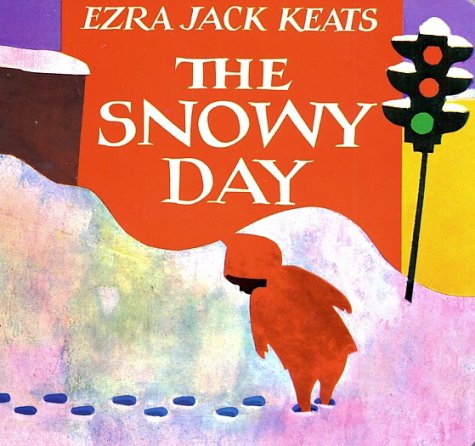
The Snowy Day


The Snowy Day. written and illustrated by Ezra Jack Keats. 1962. 32p. New York: HarperCollins. (006025565X). 

Author/Illustrator Website: www.ezra-jack-keats.org

Medium: gouache and collage

Awards and Honors: Caldecott Medal, 1963

Audience: 2 and up

Annotation: A young boy named Peter has a special day playing in the newly fallen snow.

Personal Reaction: 
Published in 1962, The Snowy Day is Ezra Jack Keats' beautiful story of a young boy's adventures playing in the newly fallen snow. It is a benchmark of children's literature in that is the first full-color picture book to feature an African-American protagonist. While many people have debated Keats' work in regards to its depiction (or non-depiction) of race, these criticisms miss the point.  

The Snowy Day depicts the world with a childlike innocence and shows the reader the magic in what some may consider mundane. There is a quiet vibrance in his blending of paper collage and gouache, as well as in his simple writing. Keats captures the sense of wonder in everyday situations that very young children possess. It is this quality, coupled with Keats' expressive and elegant illustrations, that have made The Snowy Day a favorite children's book for 50 years.

Friday, May 4, 2012

A Ball for Daisy


A Ball for Daisy. written and illustrated by Chris Raschka. 2011. 32p. New York: Schwartz & Wade. 

Author/Illustrator Website: none

Medium: ink, watercolor and gouache
 
Awards and Honors: Caldecott Medal, 2012, A New York Times Best Illustrated Children's Book of the Year, A School Library Journal Best Book of the Year, A Horn Book Fanfare Title

Audience: 2 and up

Annotation:
A tale of love, loss and forgiveness, all as seen through the eyes of a dog.

Personal Reaction:
A Ball for Daisy is the latest Caldecott Medal winner from acclaimed author/illustrator, Chris Raschka (his Hello, Goodbye Window also won the Caldecott Medal in 2006). Raschka spins a tale of love, loss and forgiveness, as seen through the eyes of a dog, in his newest story. Daisy adores her red ball- she chases it, plays with it, and even cuddles up with it when she sleeps. When her beloved ball is accidentally popped by another dog, Daisy is devastated until the next day when the dog and its owner surprise Daisy with a special gift.

Raschka's illustrations- all flowing black lines, washes of soft pastel and pops of brilliant color- are stunners. They're fluid and loose, almost to the point of abstraction, yet remain expressive. This refined technique is paired with comic-style panel sequences to striking effect. Raschka keeps the action dynamic with variation in perspective and frames- full-page panels are mixed with multi-panel sequences and full bleed double-page spreads. The illustrations demonstrate a sophisticated artistry and eye for design rarely seen in children's books. 

I'm a sucker for well-executed wordless picture books and A Ball for Daisy hits all the right notes. Compelling storyline? Check. Engaging characters? Check. Brilliant illustrations? Check.


Sunday, August 7, 2011

The Invention of Hugo Cabret


The Invention of Hugo Cabret
written and illustrated by Brian Selznick, 2007. New York: Scholastic Press. (0439813786).

Author Website: http://www.theinventionofhugocabret.com/index.htm

Media: pencil on Fabriano Artistico watercolor paper, film stills, sketches by Georges Melies

Awards and Honors: 2008 Caldecott Medal; National Book Award Finalist; A New York Times Best Illustrated Book of 2007; A Publishers Weekly Best Book of 2007; 2007 Quill Award Winner; 2007 Borders Original Voices Finalist; 2007 #1 Best Book for Kids from Barnes and Noble; Parenting Magazine "Mom–Tested Book of the Year"; Miami Herald Best Kids Book of 2007; Rocky Mountain News Best Book of 2007; San Francisco Chronicle Best Book of 2007; Kansas City Star Top 100 Books of 2007; Columbus Dispatch Best Book of 2007; Los Angeles Times Favorite Children's Book of 2007; Kidsreads.com Best Book of 2007

Annotation: 
A thieving orphan, a one-eyed man, a strange little girl and a mean old man are the characters in Brian Selznick's 500 page, The Invention of Hugo Cabret, a book that blurs the lines between novel, picture book, graphic novel and movie. 

Personal Reaction/Discussion of Artwork: 

     Brian Selznick's The Invention of Hugo Cabret is an ambitious, original and impressive book for children. The plot line is classic mystery/thriller, but the unique physical form of the book is what really sets it apart. Selznick says of the book that it is "not a exactly a novel, not quite a picture book, not really a graphic novel, or a flip book or a movie, but a combination of all these things". 
  
     Hugo is a twelve year old orphan who lives in the walls of a Paris train station. After his tippling uncle disappears, leaving Hugo to fend for himself, his existence consists of tending to the clocks in the station and trying to fix up an old automaton that his father had been working on when he mysteriously died. Hugo tries to make existence a secret, but when he is discovered stealing parts for the automaton from an old man who runs a toy shop in the station, his life as he knows it changes forever. 
 
     The plot winds and turns as Selznick introduces new twists that keep Hugo (and the reader) guessing. To Selznick's credit, he keeps the action neatly uncoiling, even as the plot becomes more and more involved. There are a few story elements that don't get wrapped up (What really did happen to Hugo's uncle, and what of the dead man found in the river with his uncle's flask? Was there something sinister behind the mysterious circumstances of Hugo's father's death?), but Selznick's knack for pacing the complicated storyline is satisfying.


     The writing is serviceable, but it's Selznick's illustrations that really shine here. They move the story along and give it a truly cinematic feel. I found myself reading quickly through the written parts in anticipation of the next illustrated sequence. They're dark, moody crosshatched graphite drawings that draw readers in immediately- you feel that you're a part of the action during the illustrated scenes. The illustrations have the feeling of camera shots and Selznick uses them to establish setting, further the narrative and add detail to the story. I also applaud the decision to adorn the spine of the book with the close up drawing of Hugo's face. I actually first found the book while I was perusing the fiction shelves of my library and the book stood out amongst the rest of the plain, solid spines. Selznick includes sketches and movie stills from early cinema (which figures in the plot to a great degree) in the book. The result is a rich, magical, multimedia experience that children will enjoy.

Friday, August 5, 2011

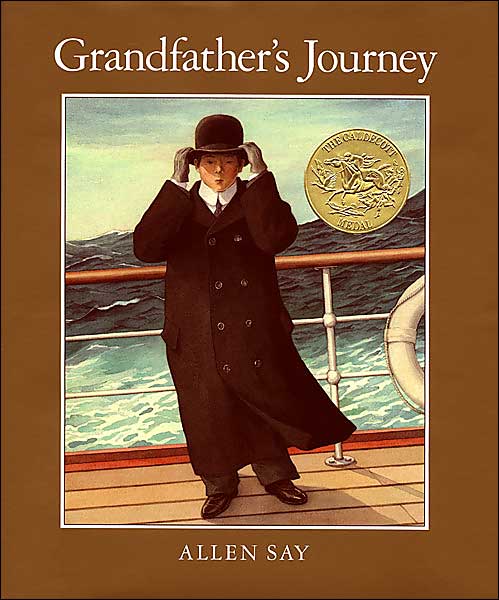
Grandfather's Journey


Grandfather's Journey
written and illustrated by Allen Say. 1993. New York: Houghton Mifflin Company. (0395570352)

Media: watercolor

Awards and Honors: Bulletin Blue Ribbon; Caldecott Medal Book; ALA Notable Book; Booklist Editors' Choice; Boston Globe/Horn Book Award; Horn Book Fanfare Selection; School Library Journal Best Books of the Year; New York Times Best Illustrated Children's Books of the Year

Annotation:
Allen Say's tribute to his grandfather and the two lands that he loved- Japan and California.

Personal Reaction:
     Grandfather's Journey is the touching and personal story of Allen Say's grandfather and his life lived between two countries- Japan and the United States. As a young man, Say's grandfather came to the United States, where he admired the beauty and splendor of the country and the cities. He finally settled in California, the place that he liked best. He crossed the Pacific again to marry his childhood sweetheart and brought her back to California. There they had a child (Say's mother), but returned to Japan when she was a teenager. She was married in Japan and gave birth to Say, who was raised there. His grandfather grew old in Japan, but always longed to visit California once more. World War II made those dreams impossible, but Allen Say grew up and moved to California- a place that he came to love, just like his grandfather had. Illustrated in beautiful, evocative watercolors, this book speaks to family, home and longing. Say has created a very special book which touches on universal themes